
 EN
Quick Links


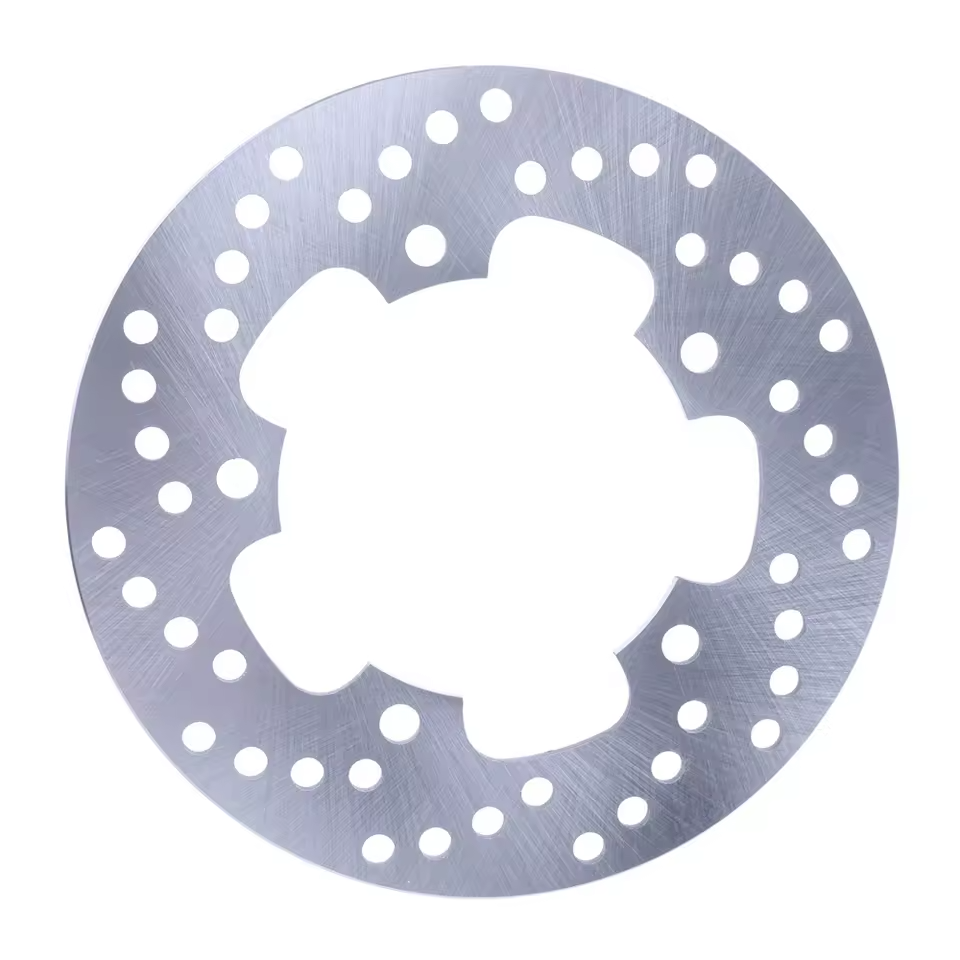
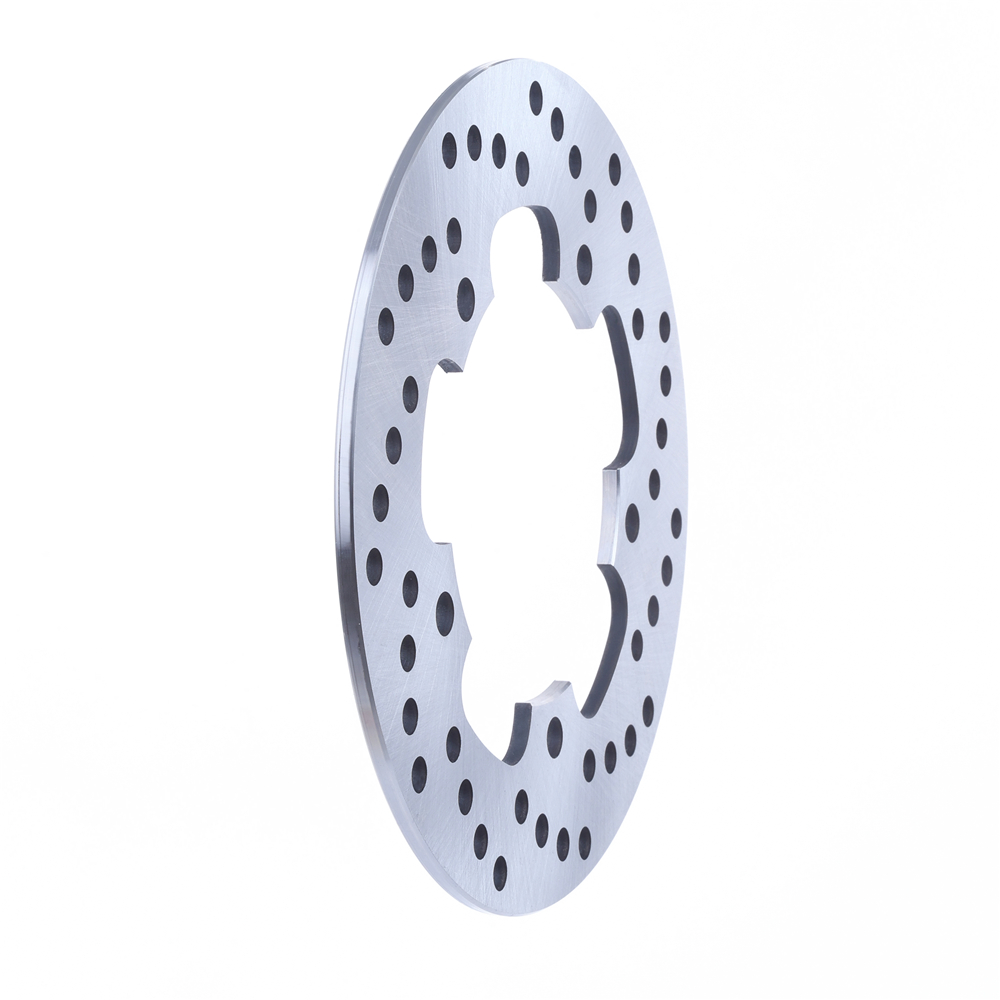
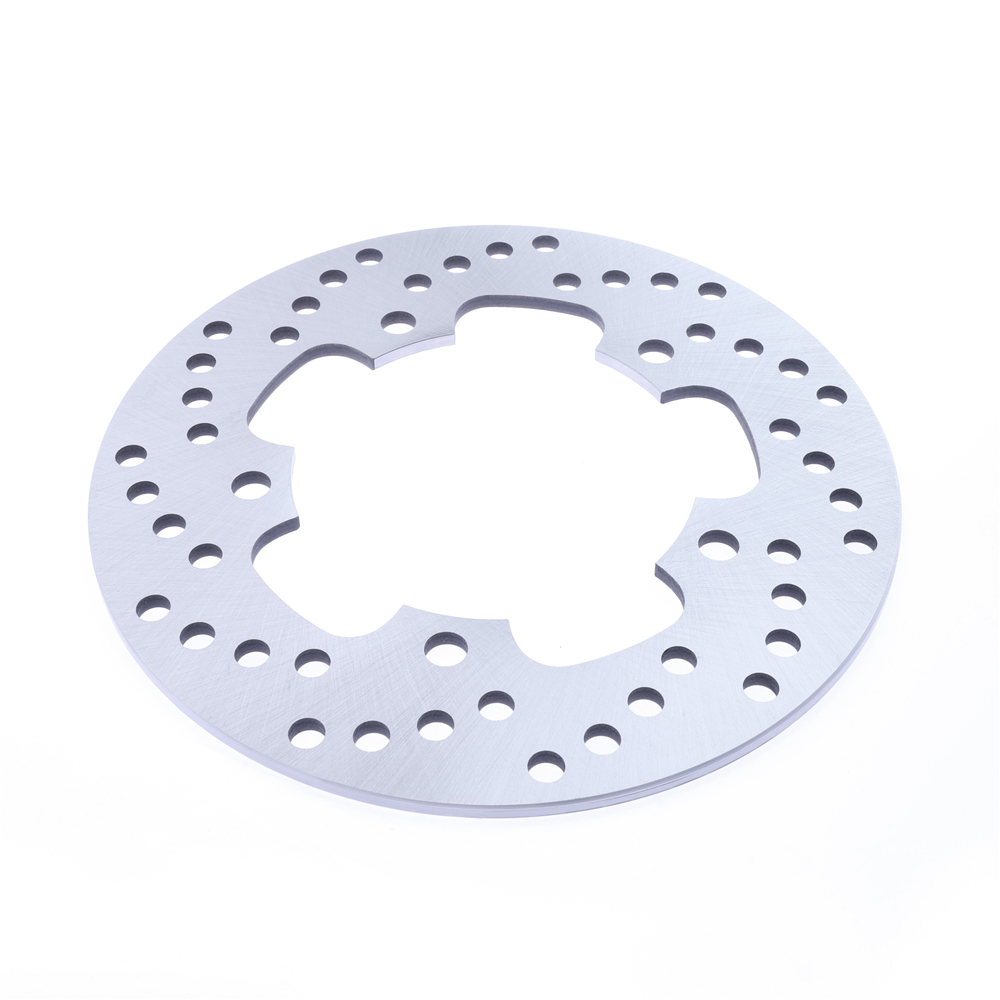
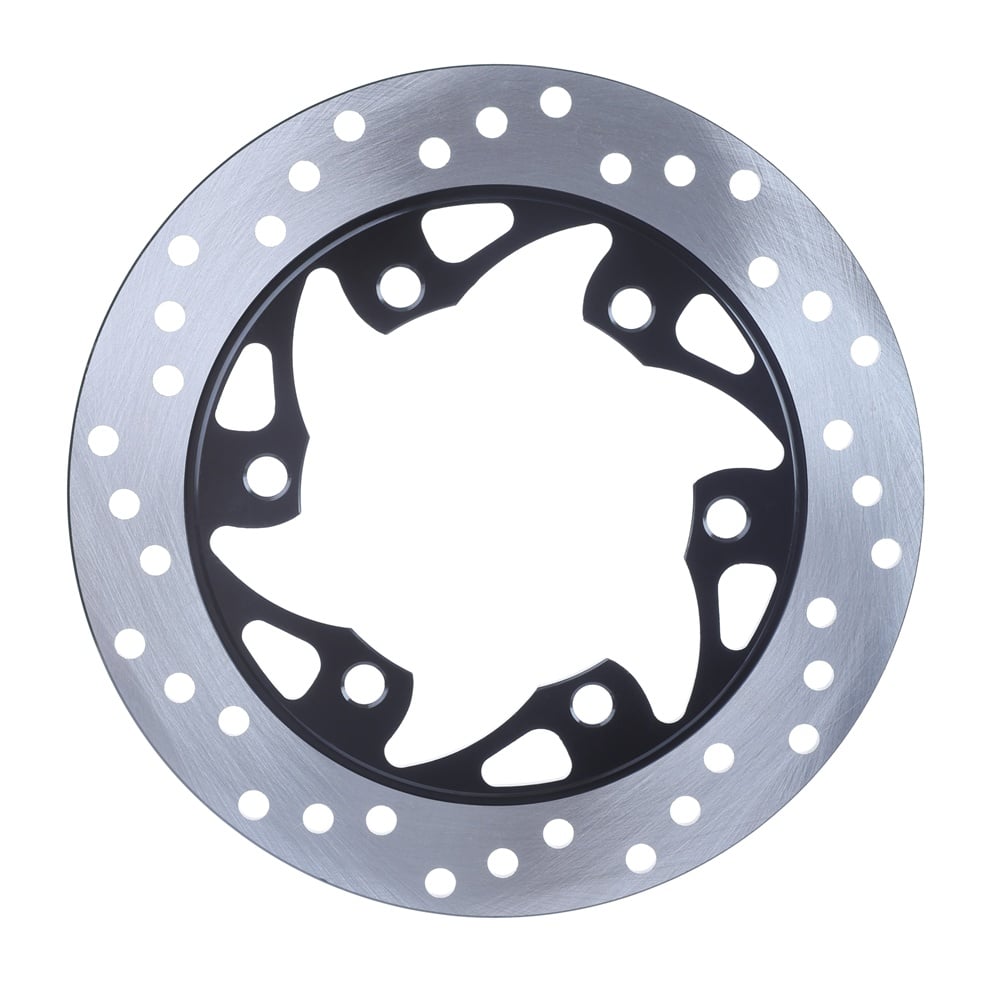
Five millimetres of stainless on a 220 mm disc: the thickest plate we sell, on one of the smallest diameters. That combination is not an accident — and it is the reason you cannot treat this disc like the 4 mm ones.
Wholesale begins at 25 pieces; the tier table sits in section 11.
220 mm drilled plate
5 mm thick
One piece of stainless
125 mm between hole centres.
Minimum order 25 pcs
Price printed
Type |
Brake disc, rear |
Design |
Fixed, one-piece stainless, 5 mm, plain finish |
Surface |
Drilled, ~42 holes, round edge |
Outer diameter |
220 mm |
Centre |
Six-petal aperture — no round bore |
Thickness |
5 mm |
Hole centres |
125 mm |
Fixing bolts |
5, at 72° |
ABS ring |
None |
Fitment |
SYM GTS 125 / 150 / 250 |
Weight |
0.9 kg |
Minimum |
25 pcs |
Three places on the supplier's page give three different model lists, and a buyer deserves to know that before a case is committed.
Where |
What it says |
Product title |
GTS 125 150 250 HD EVO |
Model Number field |
GTS 125 200 250 |
Specification variants |
GTS 125 150 250 |
150 or 200 — the two lists do not agree, and SYM has sold the GTS in 125, 150, 200 and 250 forms. Those are different machines with different power and, quite possibly, different rear brakes.
What to do before you order, in order:
Get the factory's own fitment list in writing
1. — not the listing text, which is internally inconsistent, and not this page, which is repeating the supplier's claims with the inconsistency disclosed.
Measure the old disc.
2. This one is
220 mm, 5 mm, five bolts, 125 mm between hole centres.
If the customer's disc is 4 mm, it is not this part, whatever the model name says.
Ask the customer for the year and the exact displacement
3. , not "GTS 250". A maxi-scooter that has been in production for a decade will have had more than one rear brake.
And one thing that is genuinely absent: there is no OEM part number on the listing at all. Not in an attribute field, not in the description. If your market indexes by SYM's number, ask the factory — this page will not fabricate one.
Why this section exists rather than a tidy fitment table: a table that repeats a contradiction looks authoritative and is not. A buyer who knows the uncertainty can resolve it in one email; a buyer who does not, orders a case and finds out in the returns department.
Model |
Notes |
SYM GTS 125 |
Rear wheel — confirm the plate thickness on the old disc |
SYM GTS 150 |
Rear wheel — confirm; the listing also names a 200 |
SYM GTS 250 |
Rear wheel |
220 mm outer, 5 mm thick, 125 mm between hole centres, five bolts at 72°.
No ABS ring, and nothing to transfer.
No round centre bore — the centre is a six-petal aperture, so there is no inner diameter to quote, and nothing for a hub spigot to sit in.
Nothing on the plate: no part number, no thickness stamp, no minimum-thickness marking. The 5 mm figure exists only as an annotation on the supplier's drawing — the specification table on that page has no thickness field at all. Have the factory confirm 5 mm in writing before it goes into your own specification sheet, because a 5 mm and a 4 mm disc of this diameter are not interchangeable and the difference is invisible in a photograph.
A maxi-scooter's rear brake passes every test a solo rider can give it and still fails on the first hill with a passenger. The load is the variable that matters, and it is the one nobody includes.
The test, once, on a quiet road:
Fill the tank and take a pillion
1. — or ballast equivalent to a passenger.
Half a tank and a solo rider is not the test.
From about 50 km/h, brake to a stop using both brakes, firmly but not abruptly.
2. Repeat three times, letting the brakes cool between stops.
On the fourth stop, use the rear brake harder than usual
3. — the way a rider does when the front is already loaded.
Feel for the change
4. : a lever or pedal that comes back further, a brake that fades, or a smell of hot friction material.
What each result means:
What you notice |
What it tells you |
Nothing changes across four stops |
The disc and pads are matched to the load. Done |
The pedal comes back further on the third or fourth stop |
Fluid is boiling or aerated — change the fluid before blaming the disc |
The brake fades but recovers after cooling |
The friction pair is at its heat limit; this is where a 4 mm disc would have failed sooner |
A shudder that appears only when loaded |
The disc is at its thickness limit, or a mounting face is not flat — the load is exposing it |
A smell of burning and no fade |
Pads are contaminated; the disc is probably fine |
Why this test and not a stand check: on the stand, a rear brake only has to hold a wheel. Under two people at speed it has to absorb energy, and that is the job it was designed for — so that is the job to test. Ten minutes, once per pad set, and it catches the faults that only appear when the scooter is working.
Field |
Value |
Brand |
RUNTONG |
Part number |
RB-BD023 |
Type |
Rear brake disc, drilled |
Design |
Fixed, one-piece stainless steel, 5 mm, plain finish |
Outer diameter |
220 mm |
Centre |
Six-petal aperture — no round bore |
Thickness |
5 mm (supplier's drawing annotation; no stamp, no thickness field on the listing) |
Mounting hole centres |
125 mm |
Fixing bolts |
5, at 72°, slight counterbore |
Surface |
About forty-two holes in staggered bands, round edge |
Carrier |
None — single plate, no fasteners |
ABS ring |
Not fitted |
Position |
Rear wheel |
Fitment |
SYM GTS 125 / 150 / 250 — see section 5; the listing also names a 200 |
OEM reference |
Not published — obtain from the factory before listing |
Weight |
0.9 kg |
Single package |
23 × 23 × 3 cm |
Carton |
23 × 23 × 12 cm, 25 pcs |
Certification |
ISO 9001 |
Warranty |
12 months |
Price |
EUR, tiered — see section 11 |
Wholesale minimum |
25 pcs |
Custom print |
From 1,000 pcs |
Dispatch |
7 days from stock; 10–15 days to build |
Freight |
Air, sea, land |
Price, in EUR, per piece
Quantity |
Price |
25–49 pcs |
€5.17 |
50–199 pcs |
€4.99 |
200–499 pcs |
€4.71 |
≥ 500 pcs |
€4.35 |
€5.17 from 25 to 49 pieces, €4.99 from 50 to 199, €4.71 from 200 to 499, €4.35 from 500. EUR per piece, carriage and duty excluded.
The supplier's drawing says 5 mm. There is no thickness stamp on the plate and no thickness field in the listing's specification table, so have the factory confirm it in writing before publishing it — particularly because a 4 mm disc of the same diameter also exists.
We do not know, and the supplier's own page contradicts itself: the title says 150, the model field says 200. Section 5 explains how to resolve it — measure the old disc and ask the factory for a written fitment list.
No. The listing has no OEM field and the plate is unmarked.
There is none — the centre is a six-petal aperture, not a round hole. The 125 mm figure is the hole spacing.
Drilled only: about forty-two holes in staggered bands, round outer edge.
Not on this machine. It will fit and it will have less heat capacity in a brake that already has little diameter to spare. Section 4.
No. Twenty-five pieces is the entry point, and it fills one carton exactly.
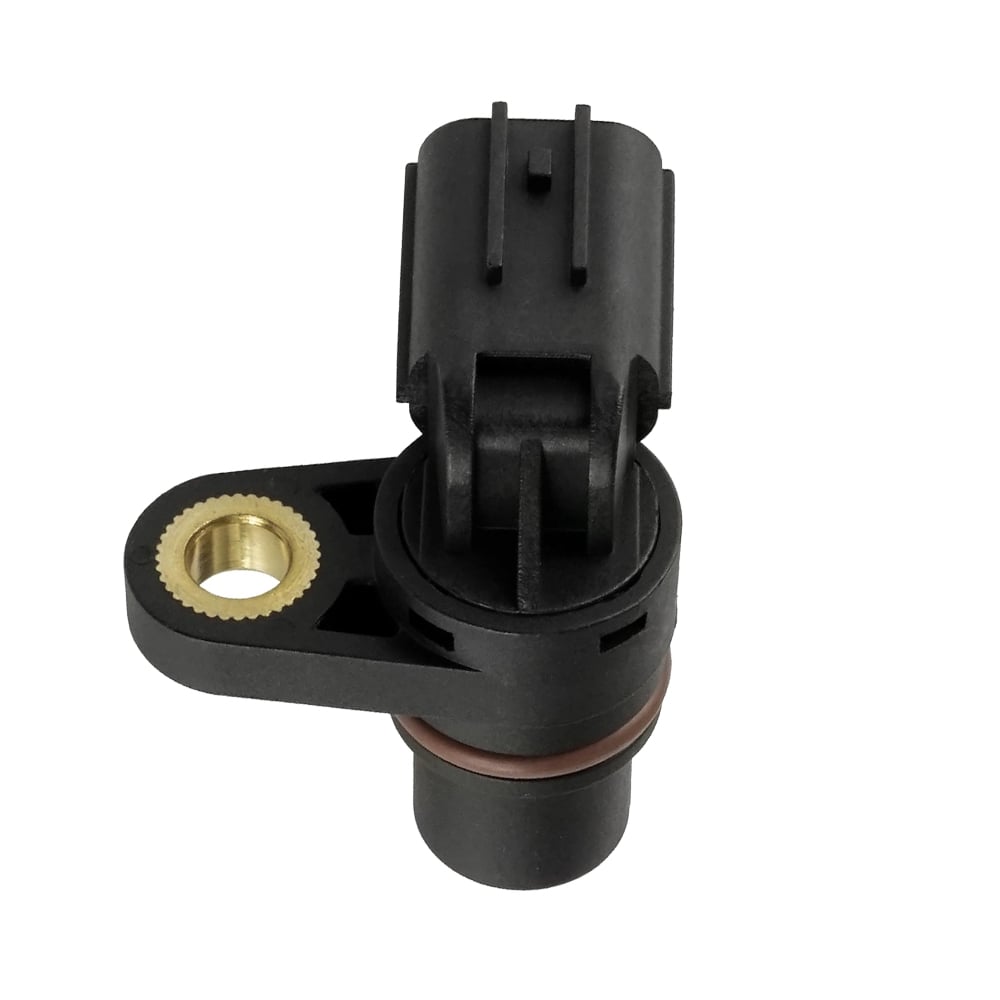
Honda RANCHER FOREMAN TRX420 TRX500 TRX700XX 37700-KZR-601 Crankshaft Position Sensor
KTM DUCK RC 125 200 250 390 230mm Motorcycle Rear Brake Disc Plate
Honda BIZ 125 Throttle Body — 16400-KSS-C02, 22 mm
26 mm Throttle Body for the Honda PCX 150 / WW 150 — 16400-KZY-B01